Top 10 Warehousing Companies in India: Comprehensive Market Guide
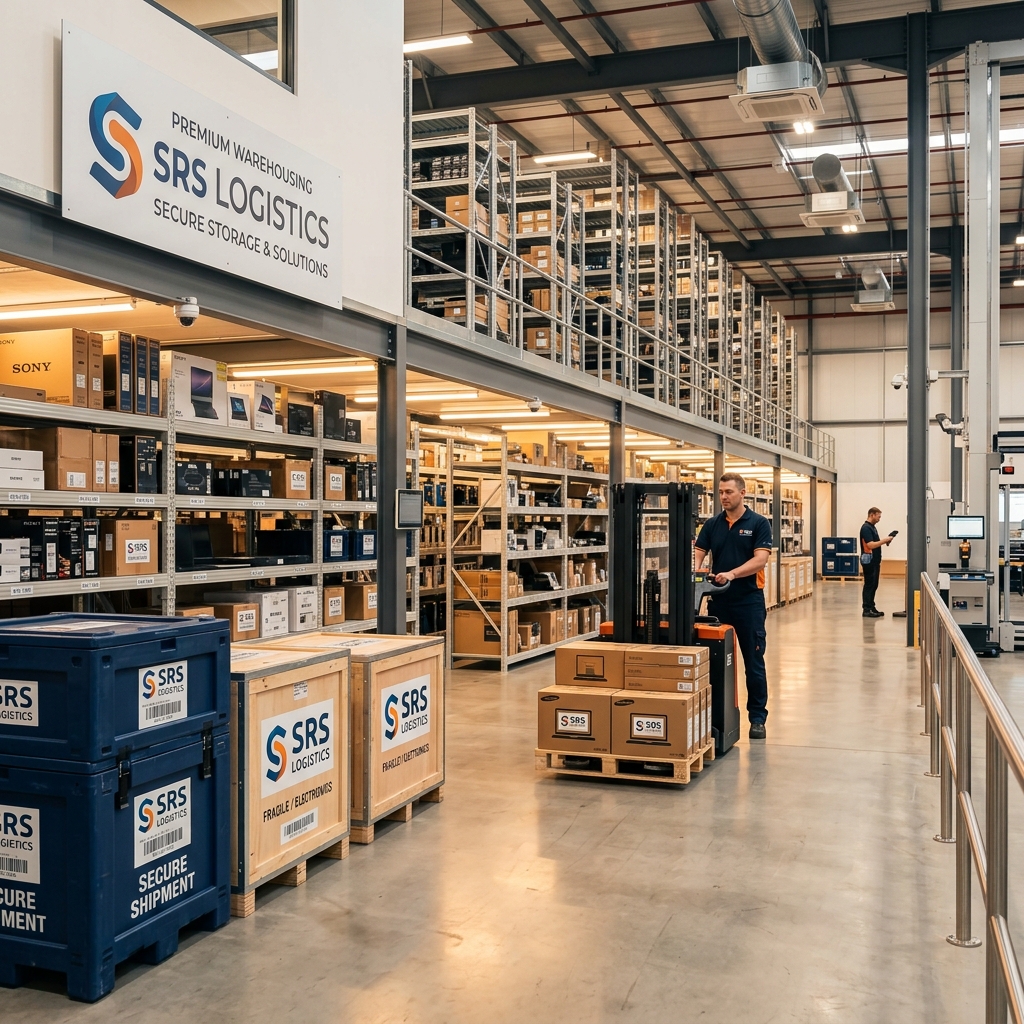
Driven by the rapid growth of direct-to-consumer (D2C) brands, manufacturing expansions under Production Linked Incentive (PLI) schemes, and post-GST consolidation, India's industrial storage ecosystem has undergone a massive modernization. According to market analysis data from Mordor Intelligence, the India warehousing market reached a valuation of USD 27.29 billion in 2026 and is projected to expand to USD 40.99 billion by 2031, growing at an annual rate (CAGR) of 8.48%. Furthermore, national operational storage stock crossed 514 million square feet in 2026, with Grade-A compliant facilities expanding at over 13.85% annually.
Choosing the right partner for supply chain and warehousing operations is critical for maintaining lean inventory, meeting tight delivery windows, and controlling per-unit logistics overhead. Below is an in-depth breakdown of the largest warehousing companies in India leading this transformation.
Market Snapshot: India Warehousing Sector Dynamics
To help supply chain executives evaluate domestic infrastructure options, the table below outlines core performance indicators across key logistics corridors:
| Strategic Parameter | Industry Benchmark | Primary Economic Driver |
|---|---|---|
| Total Domestic Storage Stock (2026) | 514+ Million Sq. Ft. across primary & secondary markets | Manufacturing PLI policies & e-commerce expansion |
| Grade-A Growth Trajectory | Expanding at a 13.85% CAGR through 2031 | Demand for high-clearance, tech-enabled, ESG-compliant parks |
| Manufacturing Leasing Share | Captures 48% of new leasing activity | Local assembly expansion in electronics, auto, & heavy engineering |
| Top Regional Cluster | West India commands 35.19% market share (led by Bhiwandi & Pune) | Proximity to JNPA port and dense urban consumer bases |
| Average Monthly Rental Range | INR 19 – 28 per sq. ft. across Top 7 Metros | Supply-demand imbalances in Grade-A micro-markets |
The Strategic Role of Warehousing in Supply Chain Management
The function of warehousing in supply chain management has evolved far beyond static storage. Modern distribution hubs serve as dynamic processing centers that integrate inventory tracking, automated order sorting, multi-modal transportation, and reverse returns handling into a single operational workflow.
Effective warehousing and distribution networks allow enterprise brands and scaling startups to decentralize inventory across key regional hubs. By positioning stock closer to end consumers in major commercial centers, organizations minimize transit times, lower fuel usage, and optimize overall transportation warehousing budgets.
Top Warehousing and Logistics Companies in India
The following list highlights the top 10 warehousing providers delivering modern storage, fulfillment, and multi-modal distribution infrastructure across India:
Taking the top position for comprehensive corporate storage and fulfillment solutions, SRS Combined Cargo delivers an agile, tech-enabled, and cost-effective distribution framework for startups, mid-market enterprises, and global corporations across India.
Recognizing that rigid, legacy storage models often create operational bottlenecks, SRS Combined Cargo offers custom-built warehousing and fulfillment services tailored to specific industry demands.
Key Operational Capabilities:
By combining modern infrastructure with personal service oversight, SRS Combined Cargo enables Indian enterprises to reduce operational costs while maintaining fast delivery times across the country.
ESR India
A major industrial real estate platform in Asia-Pacific, ESR warehousing specializes in developing large-scale, modern logistics parks. Their facilities across Mumbai, Pune, and Delhi-NCR feature Pre-Engineered Building (PEB) structures, solar-powered systems, and high floor-load capacities designed for heavy manufacturing and e-commerce tenants.
IndoSpace
IndoSpace is one of the largest developers and managers of industrial and logistics parks in India. Maintaining a vast network of Grade-A facilities located along major industrial corridors, IndoSpace provides institutional-grade infrastructure with strong connectivity to major ports, national highways, and rail freight terminals.
DHL Supply Chain India
A global leader in contract logistics, DHL Supply Chain manages extensive storage capacity across India. They provide specialized warehousing and distribution solutions utilizing automated sorting systems, robotics, and cold-chain infrastructure tailored for pharmaceuticals, retail, and automotive supply chains.
TVS Supply Chain Solutions
Part of the TVS Mobility Group, TVS Supply Chain manages warehouse space globally and domestically. They specialize in complex in-plant warehousing, aftermarket spare parts management, Complete Knock-Down (CKD) kit assembly, and AI-driven inventory analytics.
Mahindra Logistics
A subsidiary of the Mahindra Group, Mahindra Logistics provides integrated 3PL and fulfillment services for automotive, telecom, consumer goods, and e-commerce sectors. They operate multi-client fulfillment centers and offer flexible storage space with integrated transport management systems.
Allcargo Logistics
Headquartered in Mumbai, Allcargo Logistics operates modern warehousing complexes alongside container freight stations (CFS) and inland container depots (ICD). They excel in Less-than-Container Load (LCL) consolidation, global ocean freight, and port-based industrial storage.
Prozo
Prozo is a tech-driven supply chain platform offering fast fulfillment services for B2B, B2C, and D2C brands. They operate a distributed network of fulfillment centers powered by proprietary inventory management software and demand-forecasting algorithms.
TCI Supply Chain Solutions
A division of Transport Corporation of India (TCI), TCI Supply Chain provides end-to-end contract logistics, automated storage, temperature-controlled facilities, and reverse logistics services for healthcare, retail, and industrial clients.
Ethics Prosperity
Ethics Prosperity provides customized third-party logistics (3PL) solutions, operating a nationwide network of Grade-A storage assets. They focus on technology integration, cold chain handling, and scalable fulfillment models across tier-1 and tier-2 markets.
Regional Storage Trends Across Top Indian Metros
To optimize distribution networks, logistics managers must align their storage footprint with regional consumer markets and multimodal connectivity nodes:
Warehousing Companies in Bhiwandi, Mumbai & Pune
West India accounts for over 35% of total domestic warehouse absorption, with Bhiwandi and Chakan acting as major centers for import-export logistics, e-commerce storage, and automotive distribution. Proximity to JNPA port and key highway links provides immediate transit access across Western and Central India.
Warehousing Companies in Delhi-NCR, Gurgaon & Noida
Delhi-NCR leads northern distribution, with major logistics clusters located in Luhari, Farrukhnagar, and Greater Noida providing easy access to multi-state retail markets, heavy manufacturing corridors, and fast e-commerce delivery networks across Punjab, Haryana, Rajasthan, and Uttar Pradesh.
Warehousing Companies in Bengaluru & Chennai
Driven by hardware manufacturing, consumer tech, and automotive production, southern hubs provide specialized climate-controlled facilities and high-speed fulfillment centers connected to Chennai Port, Ennore, and the industrial corridors of Sriperumbudur and Hosur.
Warehousing Companies in Hyderabad
Hyderabad is emerging as a major warehousing and logistics hub in South India, driven by its strong pharmaceutical, e-commerce, electronics, and manufacturing sectors. Key logistics clusters around Shamshabad, Medchal, and Patancheru offer strategic connectivity to regional markets and support high-speed distribution, fulfillment, and industrial storage operations.
Key Criteria for Selecting a Warehousing Partner
Evaluating warehousing and fulfillment companies in Delhi, Mumbai, Bengaluru, or other major logistics hubs requires analyzing four core operational areas:
Ensure the provider utilizes a modern Warehouse Management System (WMS) capable of integrating directly with your corporate ERP or e-commerce ordering platforms via APIs.
Verify that the facility meets Grade-A specifications, including sufficient clear height (9 to 12 meters), heavy floor-load capacity, dock levelers, advanced fire safety systems, and ESG compliance.
Confirm that the provider offers combined transportation warehousing services to connect storage hubs smoothly with long-haul freight and last-mile delivery networks.
Look for flexible lease structures and scalable storage models that allow you to adjust space usage based on seasonal demand fluctuations.
Building a Future-Proof Warehousing Strategy
As business operations move faster, relying on fragmented, legacy storage facilities exposes organizations to inventory inaccuracies, transport delays, and higher operating costs. Modern enterprise success requires a connected approach that merges physical facility quality with digital visibility.
By partnering with an established industry leader like SRS Combined Cargo, startups and enterprises can deploy a secure, tech-enabled, and cost-effective distribution network across India, ensuring their products reach customers quickly and reliably.
Related Topics
For a broader understanding of logistics operations in India, including warehousing, freight forwarding, and supply chain management, explore our comprehensive resources:
Explore Other Blogs & Guides:
Our Logistics & Warehousing Services in India
SRS Combined Cargo offers flexible warehousing and end-to-end logistics solutions across India: